


 Share on ChatGPT
 Share on Grok
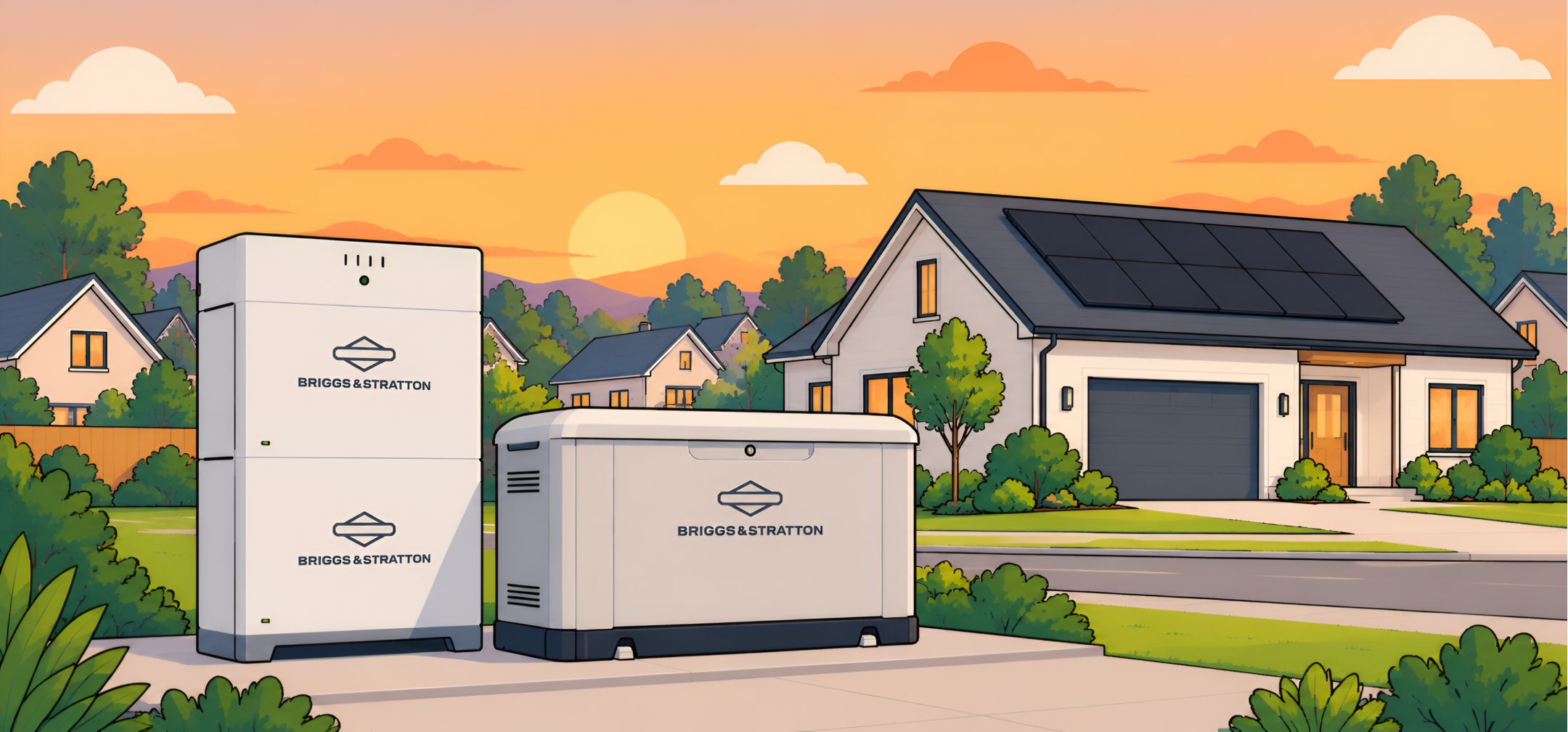
Going fully off-grid is no longer a cabin-in-the-woods story. Net billing, high rates, and plain fatigue with the utility push suburban homeowners toward it too. We hosted a webinar with Briggs & Stratton Energy Solutions to walk through the sizing math. Here’s how an off-grid solar system comes together.
Key Takeaways
- Loads come first. Daily kilowatt-hours and peak watts decide everything else.
- Design for December. Size solar for your worst month, not the yearly average.
- Keep a generator. Battery plus generator beats either one alone.
- Lithium iron phosphate (LFP) made this practical. Deep discharge, low maintenance, a much smaller bank than lead-acid.
- Get a permit. Insurers and liability lawyers care, even if the county doesn’t.
Prefer to watch? The full webinar is right here: the sizing example, plus a live Q&A on generators, lead-acid replacements, and what to do when space or budget is tight.
Why Are Homeowners Cutting the Cord?
Off-grid solar started with cabins and ranches. Now it also attracts people in states that are killing net metering, like California, Hawaii, and Illinois, where exported solar no longer earns a full credit. If sending power back pays nothing, the smart move is to use every kilowatt-hour yourself. That is off-grid design with the utility wire still attached.
$50,000
Example cost of running utility lines to a remote home, about the price of an off-grid system, and you still pay 100–200 a month afterward
Is the Grid Now Your Backup?
For many customers, yes. An off-grid solar system for a home can keep the utility connection as a fallback: the battery and generator run the house, and the grid steps in only when the batteries are low and the sun isn’t showing up. Can’t disconnect an existing home? Size the system to import and export almost nothing, and check with your local authority having jurisdiction (AHJ) before promising a full cut.
Daniel MoyerSenior Trainer, Briggs & Stratton Energy SolutionsPeople now are considering the grid as the backup.

What Are the Components of an Off-Grid Solar System?
How does an off-grid solar system work? Panels charge the batteries, the inverter turns that stored energy into household power, and a generator fills the gaps. Five pieces make it happen:
- Solar array, usually ground-mounted, since off-grid sites tend to have land
- Charge controller or hybrid inverter
- Battery bank, the priciest part
- Generator that starts automatically when the battery runs low
- The loads: lights, fridge, well pump, heating, cooling
Why Does an Off-Grid Solar System Need Generator Backup?
A generator alone is wasteful. A big unit may idle at 2–3 kW just to run lights and a fridge, because it’s oversized to start motors. An off-grid solar system with generator backup changes the job. Pair a standby generator with batteries and the battery sends a two-wire start signal. The generator runs near its sweet spot, refills the bank, and shuts off.
Daniel MoyerSenior Trainer, Briggs & Stratton Energy SolutionsWe’re going to run it hard, run it at its most fuel-efficient point, and then shut that generator off, saving the noise, the maintenance, the runtime, and more importantly, the fuel.
20 kWh
What a large generator produces in one hour at about 20 kW, enough to refill a full battery stack
It takes a lot to design a solar PV system manually. Our calculator can do it in 5 minutes
Take the solar quiz and our calculator will tell you which solar panels, batteries and inverters are best for your location, energy needs and solar system type.
Take the quizHow Do You Size an Off-Grid Solar System?
Good off-grid solar system design follows one order: loads, battery, solar, inverter. The example is the webinar’s small cabin. Swap in your own numbers.
Step 1: Add Up Your Loads
List every load with continuous watts, surge watts (motors spike on startup), and daily run hours. You end up with two answers. Energy in kWh sizes the battery. Power in kW sizes the inverter. The cabin uses 4.6 kWh a day. Any off-grid solar system calculator asks for these same numbers.
Step 2: Size the Battery Bank
An off-grid battery bank has to cover inverter losses, about 10% from turning DC into AC, plus days of autonomy: how long the house can run on batteries alone. Three days is common. One stack of three SimpliPHI 6.6 modules lands almost exactly on the answer, and that’s the whole off-grid solar battery system for this cabin.
Tip:
LFP can be drained to 100%, but for daily cycling leave about 20% in the tank. It adds years of life.
Daniel MoyerSenior Trainer, Briggs & Stratton Energy SolutionsThat’s not something you’re going to lose, because that’s going to give you more life of the battery.
Step 3: Size Solar for the Worst Month
Yearly sun-hour maps work for grid-tied systems. For an off-grid solar panel system, you need the worst month, usually December or January. Milwaukee gets about 2 full sun hours then. One presenter’s home in Northern California gets about 2.5, and his co-presenter’s sunnier site about 5. The formula takes the 4.6 kWh daily need, roughly 4% battery loss, and roughly 40% system losses from shading, tilt, and wiring.
The cabin needs about 4,000 W: 11 panels of 380 W wired in series to reach the voltage the MPPT needs.
Shade moves with the seasons. Satellite tools like Aurora Solar can model it before anyone drives down a dirt road with a Pathfinder.
Step 4: Match the Inverter
Check it against both continuous and surge watts, and go a little big. A homeowner who adds a load later shouldn’t need a new inverter. The webinar’s whole-home pick was the Sol-Ark 15K. Its 200 A pass-through lets it double as the transfer switch, and it accepts two battery stacks without an external combiner.

Sol-Ark SA-15K-2P 15.0kW Hybrid Inverter
- Size15 kW
- TypeString
- ConnectionGrid Tie, Hybrid, Off-Grid
- PhasesSingle-Phase
Pickup on Fri, Nov 6 from Millersburg, OH
Delivery on Nov 03–06
Hybrid inverters keep growing, so one unit can now run a house. A single battery stack delivers about 14 kW continuous, enough to feed a 15K inverter at its 12 kW battery output.
DC loads bite. A 24 V fridge pulling 10 A over 35 ft needs about 8 AWG wire to stay under 3% voltage drop. On AC, 14 AWG would do.
Which Loads Drive System Size?
Heating, cooling, and hot water dominate any home. A wood stove is the classic off-grid answer for heat. For cooling and efficient heating, inverter-driven heat pumps ramp up and down instead of slamming on, and their low surge rating keeps the inverter happy. Ducted and ductless versions both exist.
A heat pump water heater works the same way: one unit of electricity in, three or four units of heat out.
What About an Off-Grid Solar System for a Small Cabin?
Seasonal places work differently. Size for the months you’ll actually be there. A winter cabin with wood heat has small loads but weak sun, so the generator earns its keep. A summer desert place is the opposite.
When you leave, you can shut everything down. LFP batteries self-discharge at about 1% a month, nothing like old lead-acid. Just keep them away from hard freezes: the 6.6 charges down to 14 °F and sits through colder weather in standby.
Why Did Lithium Change Off-Grid Living?
Old lead-acid banks taught everyone to stop at 50% discharge. LFP drops that rule. Briggs & Stratton says its battery delivers about 6,000 cycles even when drained to 100%, and backs the 6.6 with a 15-year warranty, against roughly 10 years for much of the competition, according to the presenters.
The webinar’s retrofit example shows what that means in practice. A whole lead-acid bank was swapped for just five 3.8 kWh lithium batteries with the same usable energy. The modules also snap together without extra wiring, and they need almost no upkeep.
Charge rate matters most for lifespan. A 0.5C rate (full in two hours) is within spec, though off-grid systems cycle far slower than that.
Daniel MoyerSenior Trainer, Briggs & Stratton Energy SolutionsLiving off-grid doesn’t have to feel like living off-grid anymore.
Permits, Safety, and Monitoring
Off-grid doesn’t mean off-code. Permit the system and follow local fire and electrical codes, because that’s what insurers ask about after a claim. Roof arrays need rapid shutdown; ground mounts don’t. Our connection guide walks through the order of connections.
Portable power stations aren’t built or listed for permanent home wiring. Stationary batteries go through UL 9540 testing, and many portable units never do.
After commissioning, use the monitoring portal. Alerts show problems early, and they show when a family’s loads have outgrown the system.
What If Space or Budget Is Tight?
Cost is the big question, and the battery is the biggest line in any off-grid solar system cost. If the property can’t fit a big array, or 40 kWh is out of reach, the trainers’ fixes are:
- Put the array on a pole or ground mount away from the house and run power in at higher voltage
- Cut loads first: efficient fridge, washer, dryer
- Run some appliances on gas instead of going all-electric
- Start with a smaller battery and let the generator cover peaks
- Begin with an off-grid solar system kit and adjust it to your load list, instead of designing from scratch
Daniel MoyerSenior Trainer, Briggs & Stratton Energy SolutionsWhen you have a complete system, battery is always going to be the most expensive part of your system.
$50 a day
Propane cost of running a generator 10 hours at about 2 gal/hour and 2.50/gal. A battery-first setup needs roughly 2 hours ($10) every couple of days
Where to Start
Start with the load list, before you look at a single product. There’s no single best off-grid solar system, only the one that matches your loads. If you want a second pair of eyes, A1 SolarStore’s engineers can review your list and propose a matching setup.
Get that list right and the rest is arithmetic. Get it wrong and no battery is big enough.
FAQ

It takes a lot to design a solar PV system manually. Our calculator can do it in 5 minutes
Take the solar quiz and our calculator will tell you which solar panels, batteries and inverters are best for your location, energy needs and solar system type.
Take the quiz
Alina has always been drawn to the intersection of technology and everyday life. Joining A1 SolarStore as a contributing writer, she brings fresh curiosity and a researcher's eye to the topics of clean energy and sustainability.
More articles from this author


