


- By: Maria Skornyakova
- Batteries
- Updated: Apr 15, 2026
Best Deep Cycle Battery: How to Choose the Right One for Your Needs
Scam alert: always shop at a1solarstore.com – do not trust any other domain.



3 kW Roof-Top Grid-Tie System with Microinverters


5 kW Roof-Top Grid-Tie System with Microinverters and Battery Backup

6 kW Ground-Mounted Grid-Tie System with Microinverters and Battery Backup
8 kW Roof-Top Grid-Tie System with Microinverters and Battery Backup
9 kW Roof-Top Grid-Tie System with Microinverters and Battery Backup
11 kW Roof-Top Grid-Tie System with Microinverters
12 kW Roof-Top Grid-Tie System with Microinverters and Battery Backup


12 kW Roof-Top Grid-Tie System with String Inverter

12 kW Ground-Mounted Grid-Tie System with Microinverters
15 kW Ground-Mounted Grid-Tie System with Microinverters and Battery Backup
40 kW Roof-Top Grid-Tie System with Microinverters
40 kW Roof-Top Grid-Tie System with String Inverter
40 kW Ground-Mounted Grid-Tie System with Microinverters and Battery Backup
50 kW Roof-Top Grid-Tie System with Microinverters
50 kW Roof-Top Grid-Tie System with Microinverters and Battery Backup
50 kW Ground-Mounted Grid-Tie System with Microinverters


80 kW Roof-Top Grid-Tie System with Microinverters


80 kW Roof-Top Grid-Tie System with String Inverter
100 kW Ground-Mounted Grid-Tie System with Microinverters and Battery Backup
2 kW Roof-Top Grid-Tie System with Microinverters
2 kW Roof-Top Grid-Tie System with Microinverters and Battery Backup
3 kW Roof-Top Grid-Tie System with String Inverter
4 kW Roof-Top Grid-Tie System with Microinverters
4 kW Roof-Top Grid-Tie System with Microinverters and Battery Backup
4 kW Roof-Top Grid-Tie System with String Inverter
5 kW Roof-Top Grid-Tie System with String Inverter
6 kW Roof-Top Grid-Tie System with String Inverter

6 kW Ground-Mounted Grid-Tie System with String Inverter
9 kW Roof-Top Grid-Tie System with Microinverters
9 kW Ground-Mounted Grid-Tie System with Microinverters
10 kW Roof-Top Grid-Tie System with Microinverters
10 kW Roof-Top Grid-Tie System with Microinverters and Battery Backup
10 kW Roof-Top Grid-Tie System with String Inverter
10 kW Ground-Mounted Grid-Tie System with String Inverter
11 kW Ground-Mounted Grid-Tie System with Microinverters
11 kW Ground-Mounted Grid-Tie System with String Inverter
12 kW Roof-Top Grid-Tie System with Microinverters
20 kW Roof-Top Grid-Tie System with Microinverters
20 kW Ground-Mounted Grid-Tie System with Microinverters
30 kW Roof-Top Grid-Tie System with Microinverters and Battery Backup
30 kW Roof-Top Grid-Tie System with String Inverter
30 kW Ground-Mounted Grid-Tie System with Microinverters and Battery Backup
50 kW Roof-Top Grid-Tie System with String Inverter
60 kW Roof-Top Grid-Tie System with Microinverters and Battery Backup
60 kW Ground-Mounted Grid-Tie System with Microinverters
60 kW Ground-Mounted Grid-Tie System with String Inverter
70 kW Ground-Mounted Grid-Tie System with Microinverters


80 kW Roof-Top Grid-Tie System with Microinverters and Battery Backup

80 kW Ground-Mounted Grid-Tie System with Microinverters and Battery Backup
90 kW Roof-Top Grid-Tie System with Microinverters
90 kW Roof-Top Grid-Tie System with Microinverters and Battery Backup
100 kW Ground-Mounted Grid-Tie System with Microinverters
2 kW Roof-Top Grid-Tie System with String Inverter
2 kW Ground-Mounted Grid-Tie System with Microinverters
3 kW Roof-Top Grid-Tie System with Microinverters and Battery Backup
3 kW Ground-Mounted Grid-Tie System with Microinverters
7 kW Roof-Top Grid-Tie System with Microinverters
7 kW Roof-Top Grid-Tie System with Microinverters and Battery Backup
10 kW Ground-Mounted Grid-Tie System with Microinverters
12 kW Ground-Mounted Grid-Tie System with String Inverter
15 kW Roof-Top Grid-Tie System with String Inverter
20 kW Ground-Mounted Grid-Tie System with String Inverter
30 kW Roof-Top Grid-Tie System with Microinverters
30 kW Ground-Mounted Grid-Tie System with String Inverter
60 kW Ground-Mounted Grid-Tie System with Microinverters and Battery Backup
70 kW Roof-Top Grid-Tie System with String Inverter
90 kW Ground-Mounted Grid-Tie System with Microinverters and Battery Backup
100 kW Roof-Top Grid-Tie System with Microinverters and Battery Backup
1 kW Roof-Top Grid-Tie System with String Inverter
2 kW Ground-Mounted Grid-Tie System with String Inverter
4 kW Ground-Mounted Grid-Tie System with Microinverters and Battery Backup
6 kW Ground-Mounted Grid-Tie System with Microinverters
8 kW Roof-Top Grid-Tie System with String Inverter
9 kW Ground-Mounted Grid-Tie System with Microinverters and Battery Backup
11 kW Roof-Top Grid-Tie System with String Inverter
15 kW Roof-Top Grid-Tie System with Microinverters
15 kW Roof-Top Grid-Tie System with Microinverters and Battery Backup
15 kW Ground-Mounted Grid-Tie System with Microinverters
20 kW Roof-Top Grid-Tie System with String Inverter
30 kW Ground-Mounted Grid-Tie System with Microinverters
40 kW Roof-Top Grid-Tie System with Microinverters and Battery Backup
40 kW Ground-Mounted Grid-Tie System with Microinverters
40 kW Ground-Mounted Grid-Tie System with String Inverter
60 kW Roof-Top Grid-Tie System with String Inverter

80 kW Ground-Mounted Grid-Tie System with Microinverters

80 kW Ground-Mounted Grid-Tie System with String Inverter
90 kW Ground-Mounted Grid-Tie System with Microinverters
90 kW Ground-Mounted Grid-Tie System with String Inverter
100 kW Roof-Top Grid-Tie System with Microinverters
100 kW Ground-Mounted Grid-Tie System with String Inverter
1 kW Roof-Top Grid-Tie System with Microinverters
1 kW Ground-Mounted Grid-Tie System with String Inverter
3 kW Ground-Mounted Grid-Tie System with String Inverter
5 kW Roof-Top Grid-Tie System with Microinverters
5 kW Ground-Mounted Grid-Tie System with String Inverter
6 kW Roof-Top Grid-Tie System with Microinverters
6 kW Roof-Top Grid-Tie System with Microinverters and Battery Backup
7 kW Ground-Mounted Grid-Tie System with Microinverters
7 kW Ground-Mounted Grid-Tie System with String Inverter
8 kW Ground-Mounted Grid-Tie System with String Inverter
The majority of solar systems in the US are grid-tie. It is the most simple configuration that provides steady income. In this section of our website you can find yourself a grid tie solar system for your home or business. All the components are already sized together to make the switch to solar easier for you.
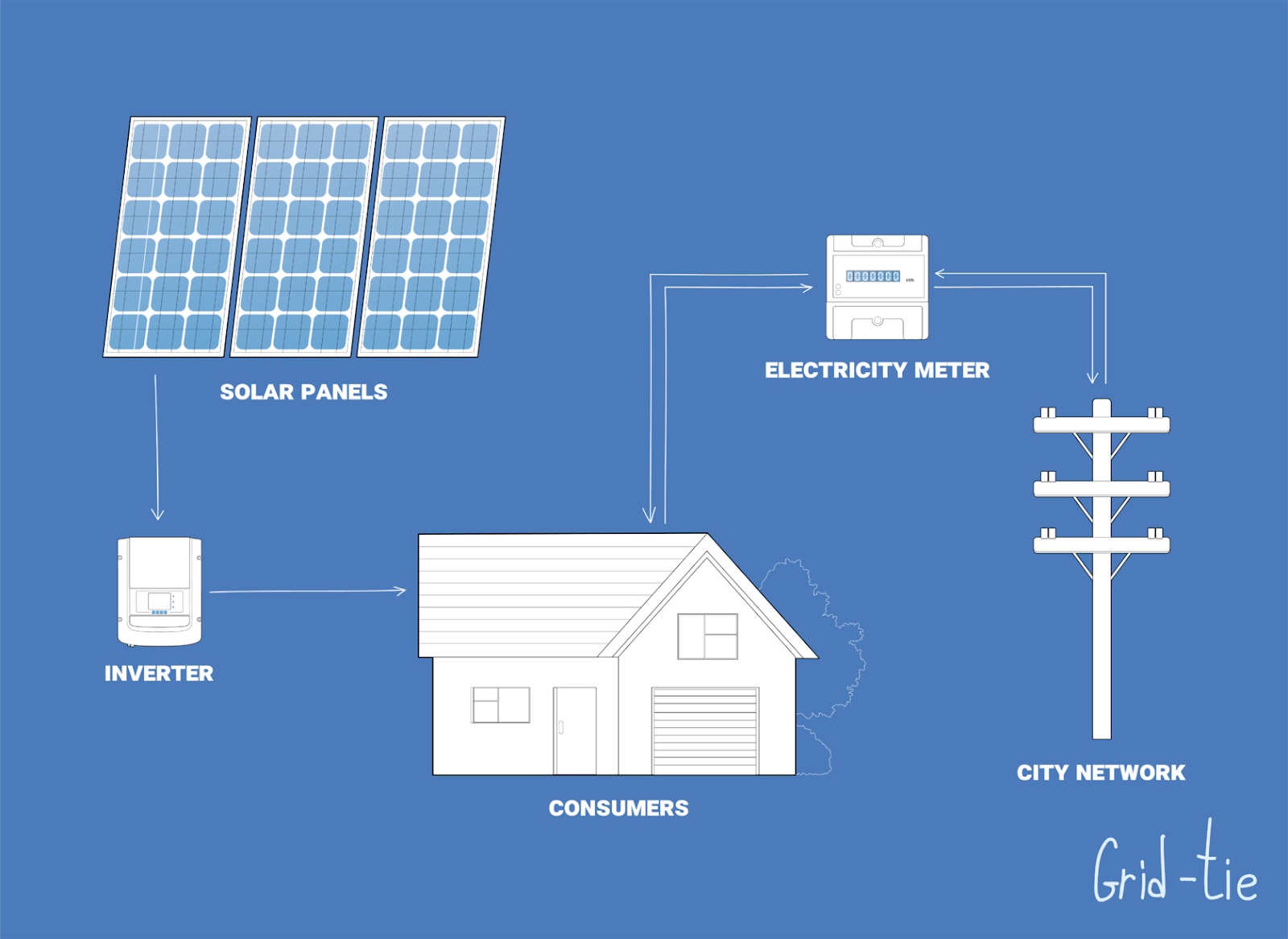
A house with a grid-tie system is still connected to power lines and you are free to use commercial electricity at any time. However, you also have solar panels which generate energy throughout the day and power your appliances. Panels by themselves produce direct current and an inverter converts it to alternating current which is suitable for most house appliances.
Not only do you pay less for commercial energy because panels produce electricity for you, you can also sell excess solar energy to your utility. This will cause your electric meter to go backwards. It’s called net metering: the exact terms of this policy may vary in different states and with different utility companies, but the idea remains the same. Net metering is the main way in which a grid tie solar panel system pays for itself. On average, a 5 kW system brings in $100-$150 a month. It can pay for itself in 5-8 years, depending on electricity rates, number of sun hours in the area and net metering policy. Since the average lifespan of PV modules exceeds 25 years, they pay for themselves several times.
The biggest disadvantage that a solar grid tie system has is its vulnerability to power outages. When a blackout happens, the system simply shuts down along with all of your appliances. That’s a safety requirement for every grid-tie inverter: workers can’t fix the grid until it’s completely free of current.
So what does a grid tie solar kit include? The essentials are solar panels and an inverter. Keep in mind that kits generally include minimum wiring because we can’t know in advance what cable length and gauge you need. You can also order addons, such as solar optimizers which decrease the impact of shading on your system.
Grid tie solar system cost is lower compared to other configurations, since you don’t get batteries for it. A lot depends on the panels that you’ll choose and the inverter. Chinese panels are the cheapest, but American-made PV modules are considered to have higher quality. String inverter is the most common choice, while microinverters are more efficient and long-lasting but more expensive as well.
At A1 SolarStore you can find a variety of grid tie solar systems for sale. Our managers will be glad to answer any questions about prices, warranties and shipping options. Here is how we operate:
Best Deep Cycle Battery: How to Choose the Right One for Your Needs
Avoid the Confiscation: The Ultimate Guide to Flying with Lithium Batteries
How Do Solar Loans Work? Understanding Financing for Solar Panels
Solar Panel Cell Technology Explained: PERC, TOPCon, HJT and What They Mean for You
Stay tuned
Free and usefull digest on solar energy. No spam
