
 Pallet Jack
 Energy Storage Systems (BESS & ESS)
 Forklift
 Golf Carts
 Home Backup
 Industrial & Commercial ESS
 Marine
 Medical Equipment
 RV
RV Scissor Lift
 Solar
Solar Tesla PowerWall Alternatives


Blackouts are coming
Are you ready?



Trojan Pacer P-1275 12V 145Ah Battery Pack of 4 for Golf Cart (4x12V)
Pickup on Thu, Oct 29
Ready to ship on Oct 28 – Nov 02


Trojan Pacer P-1275 12V 145Ah Battery Pack of 8 for Golf Cart (8x12V)
Pickup on Thu, Oct 29
Ready to ship on Oct 28 – Nov 02


Trojan Pacer P-1275 12V 145Ah Deep-Cycle Flooded Battery Golf Cart & Industrial (Pallet of 30)
Pickup on Thu, Oct 29
Ready to ship on Oct 28 – Nov 02


Trojan Pacer P-1275 12V 145Ah Battery Pack of 10 for Golf Cart (10x12V)
Pickup on Thu, Oct 29
Ready to ship on Oct 28 – Nov 02


Trojan Pacer P-1275 12V 145Ah Battery Pack of 6 for Golf Cart (6x12V)
Pickup on Thu, Oct 29
Ready to ship on Oct 28 – Nov 02


Trojan Pacer P-875 8V 165Ah Battery Pack for Golf Cart (8x8V)
Pickup on Thu, Oct 29
Ready to ship on Oct 28 – Nov 02


Trojan Pacer P-875 8V 165Ah Battery Pack for Golf Cart (4x8V)
Pickup on Thu, Oct 29
Ready to ship on Oct 28 – Nov 02


Trojan Pacer P-875 8V 165Ah Battery Pack for Golf Cart (10x8V)
Pickup on Thu, Oct 29
Ready to ship on Oct 28 – Nov 02


Trojan Pacer P-875 8V 165Ah Battery Pack for Golf Cart (6x8V)
Pickup on Thu, Oct 29
Ready to ship on Oct 28 – Nov 02


Trojan T-875 EHPT 8V 170Ah Battery Pack of 6 for Golf Cart (6x8V)
Ready to ship on Oct 28 – Nov 02


Trojan Motive T875-AES 8V 158Ah Battery Pack of 6 for Golf Cart & Industrial (6x8V)
Pickup on Thu, Oct 29
Ready to ship on Oct 28 – Nov 02


Trojan Motive T875-AES 8V 158Ah Battery Pack of 4 for Golf Cart & Industrial (4x8V)
Pickup on Thu, Oct 29
Ready to ship on Oct 28 – Nov 02


Trojan Pacer P-125 6V 235Ah Battery Pack of 8 for Golf Cart (8x6V)
Ready to ship on Oct 28 – Nov 02


Trojan Pacer P-125 6V 235Ah Battery Pack of 6 for Golf Cart (6x6V)
Ready to ship on Oct 28 – Nov 02


Trojan Motive T-125 6V 240Ah Battery Pack of 8 for Golf Cart & Solar (8x6V)
Pickup on Thu, Oct 29
Ready to ship on Oct 28 – Nov 02


Trojan Motive T-125 6V 240Ah Battery Pack of 4 for Golf Cart & Solar (4x6V)
Pickup on Thu, Oct 29
Ready to ship on Oct 28 – Nov 02
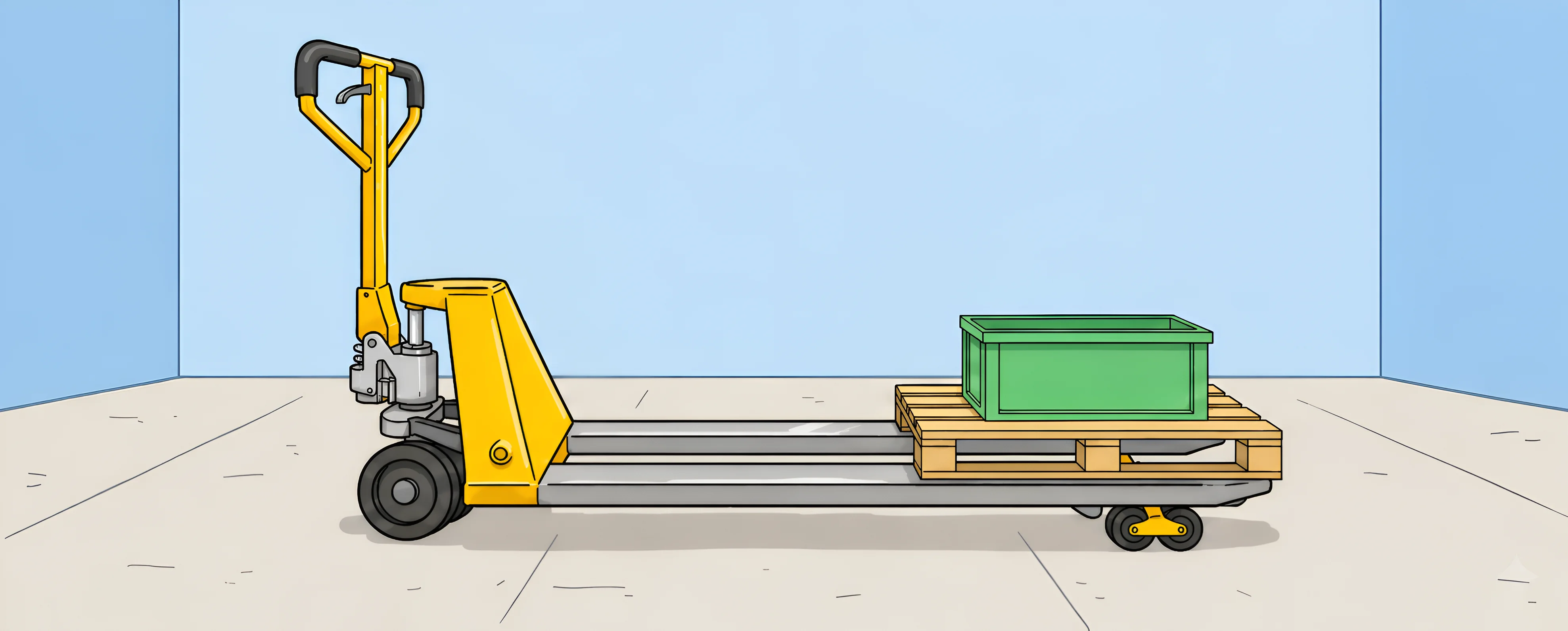
Picking the wrong battery for your electric pallet jack means unexpected downtime, premature replacements, and wasted money. This guide breaks down everything you need to know — battery types, key specs, maintenance tips, and how to match the right battery to your operation — so you can buy with confidence.
A pallet jack battery is a motive-power deep cycle battery designed to power electric walkie and ride-on pallet jacks (also called pallet trucks or Class 3 forklifts). It delivers repeated bursts of high current to drive wheels and lift loads — day after day, cycle after cycle.
This is not the same as a car battery, a marine battery, or a solar storage battery. Those are built for different discharge patterns. A pallet jack battery is engineered specifically for the demands of industrial warehouse use: heavy loads, frequent cycling, and often multi-shift operation.
There are three main battery chemistries used in battery-powered pallet jacks today. Each has a different price point, maintenance requirement, and performance profile.
Flooded lead-acid is the traditional choice. It uses liquid electrolyte and requires regular maintenance — you need to top it up with distilled water and charge it in a ventilated area because it off-gasses during charging.
The upside: it's the most affordable option upfront. The downside: it must be fully recharged after every single cycle. Skipping a full charge causes sulfation and shortens the battery's life significantly.
Best for: Single-shift operations with a low budget and a dedicated charging room.
Pros
Cons
AGM batteries are a sealed, maintenance-free version of lead-acid. The electrolyte is absorbed into fiberglass mats, so there's no watering, no spills, and no need for a separate ventilated charging room.
They also perform better in cold temperatures than standard flooded batteries — a meaningful advantage for refrigerated warehouses. AGM costs more than FLA but requires significantly less hands-on upkeep.
Best for: Cold storage environments, facilities without dedicated charging rooms, or operations wanting less maintenance than FLA.
Pros
Cons
Lithium-ion — specifically lithium iron phosphate (LiFePO4) — is the modern standard for high-frequency warehouse operations. It charges faster, lasts far longer, and requires virtually zero maintenance.
Unlike lead-acid, a lithium battery pallet jack can be opportunity charged — topped up during breaks without damaging the cells. It also comes with a built-in Battery Management System (BMS) that protects against overcharge, over-discharge, and overheating.
The upfront cost is higher, but the total cost of ownership over 8–15 years is typically lower than replacing lead-acid batteries every 3–5 years.
Best for: Multi-shift operations, high-frequency use, facilities prioritizing long-term ROI and minimal downtime.
Pros
Cons
The right battery pallet jack pairing depends on your shift pattern, environment, and budget. Use this quick-reference guide to find your fit:
If your electric pallet jack runs one shift per day and sits idle overnight with a full charge, FLA or AGM will serve you well. If the jack runs two or three shifts and you need it ready quickly between shifts, lithium is the only practical choice.
When shopping for an electric pallet jack battery, these are the numbers that actually matter:
Always match battery voltage to your jack's voltage rating. Installing a 36V battery in a 24V pallet jack will damage the equipment.
Good electric pallet jack battery maintenance comes down to a few consistent habits — regardless of chemistry.
For all battery types:
For Flooded Lead-Acid specifically:
For Lithium-Ion:
Not all battery suppliers carry industrial-grade motive-power batteries. When choosing a supplier, look for clear voltage and Ah specs, compatibility guidance for major pallet jack brands, and solid warranty terms (at least 1 year for lead-acid, 2–3 years for lithium).
A1 SolarStore offers a curated selection of deep cycle and industrial batteries — including options suited for battery-operated pallet jacks. The team can help you match the right battery to your specific equipment model and usage pattern, so you're not guessing at compatibility.
Whether you're doing a routine electric pallet jack battery replacement or upgrading from lead-acid to lithium for the first time, A1 SolarStore is a reliable place to start.
It depends on the chemistry and how well you maintain it. Flooded lead-acid batteries typically last 3–5 years (around 1,400 cycles). AGM batteries last 3–7 years. Lithium-ion batteries last 8–15 years with 2,000–3,500 cycles — making them the longest-lasting option despite the higher upfront cost.
Not reliably. Standard deep cycle batteries (like those used in RVs or marine applications) are designed for slow, sustained discharge — not the high-current bursts a pallet jack demands. They'll work temporarily but will wear out quickly under industrial cycling. Use a battery rated for motive-power / Class 3 forklift applications.
Most electric pallet jacks use a 24-volt battery. Some heavier or ride-on models use 36V or 48V systems. Always check your equipment's nameplate or manual before ordering — voltage mismatch can damage both the battery and the jack.
Electric pallet jack battery prices vary by chemistry and capacity. Flooded lead-acid batteries start around $150–$400. AGM batteries typically run $250–$600. Lithium-ion batteries range from $500 to $1,500 , depending on capacity. Factor in replacement frequency: a lithium battery that lasts 10 years often costs less over time than replacing lead-acid every 4 years.
Watch for these signs: noticeably shorter run time per charge, the battery getting hot during normal use, visible swelling or cracks in the case, or the charger failing to reach a full state of charge. For flooded lead-acid, cloudy or discolored electrolyte is also a red flag.
Yes — always use a charger matched to your battery's voltage and chemistry. A charger designed for flooded lead-acid will overcharge an AGM battery. A standard lead-acid charger will undercharge (and eventually damage) a lithium battery. Most quality lithium batteries come with or specify a compatible smart charger.
Browse pallet jack batteries and industrial deep cycle batteries at A1 SolarStore — find the right fit for your equipment, with expert support available if you need help choosing.
Why Doesn't Anyone Trust "Made in USA" Solar Anymore? Q2 2026 US Solar Market Insight
Solar Panel Maintenance 101: Cleaning, Inspection & Tips From a Tier 1 Manufacturer, Talesun
New Jersey Just Legalized Balcony Solar. Here's What You're Actually Allowed to Plug In
MRCOOL's New RV Heat Pump Runs on Your Battery Bank. Is Yours Ready?
Stay tuned
Free and usefull digest on solar energy. No spam


