


 Free delivery

- By: Alina Samarskaya
- Solar PV panels
- Updated: Nov 16, 2026


29 Group Size are out of stock
Subscribe to updates – we'll let you know when 29 Group Size are back in stock. Normally, we update products every 2 weeks.


Interstate DCM0035 12V 35Ah AGM Deep Cycle Battery (Pallet of 78)
Ready to ship on Dec 03–08


Interstate GEL0035 31Ah 12V Gel Deep-Cycle Battery (Pallet of 78)
Ready to ship on Dec 03–08


MK Battery DEKA 8AU1H 32Ah 12V AGM Deep Cycle Battery (Pallet of 111)
Ready to ship on Dec 02–07


MK Battery DEKA 8GU1H 36Ah 12V Gel Deep-Cycle Battery (Pallet of 111)
Ready to ship on Dec 02–07


Interstate DCM0055 55Ah 12V AGM Deep-Cycle Battery (Pallet of 48)
Ready to ship on Dec 03–08


Interstate GEL0055 55Ah 12V Gel Deep-Cycle Battery (Pallet of 48)
Ready to ship on Dec 03–08


Trojan Pacer P-875 8V 165Ah Battery Pack for Golf Cart (8x8V)
Pickup on Thu, Dec 3
Ready to ship on Dec 02–07


Pickup on Thu, Dec 3
Ready to ship on Dec 02–07
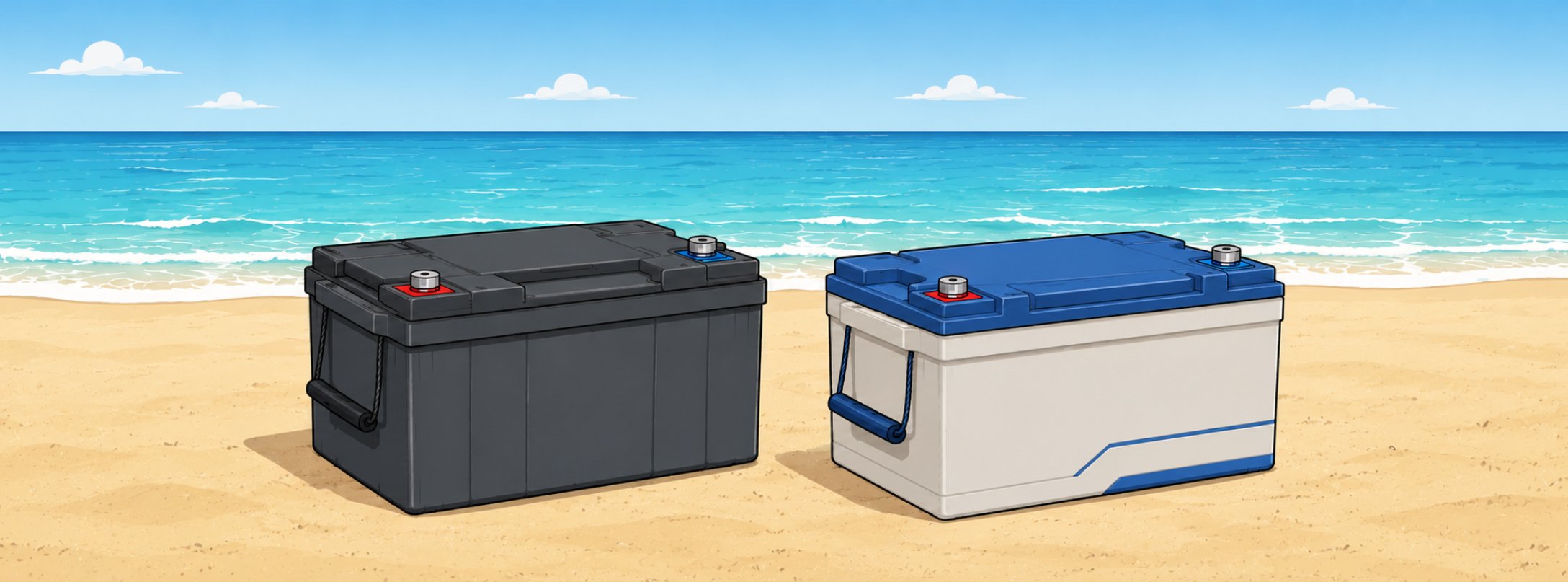 Group 29 is one of the most common deep cycle battery sizes for boats and RVs — but "group 29" is just a physical standard. It says nothing about what's inside. This guide covers what the designation means, the four chemistry types available in this size, which specs to actually compare, and how group 29 stacks up against groups 27 and 31.
What Is a Group 29 Deep Cycle Battery?
"Group 29" is a size standard set by the Battery Council International (BCI). The battery group size defines physical dimensions and terminal placement — nothing else. Chemistry, capacity, and cycle life all vary by manufacturer and model.
All group 29 batteries are 12V units with six cells. Most are sold as dual-purpose — built to both start an engine and handle a steady power draw over hours, unlike a dedicated deep cycle battery, which is optimized purely for sustained discharge rather than cranking power.
Standard group 29 battery dimensions:
Group 29 comes in three sub-variants. The footprints are similar, but the builds differ.
Pick the 29H if you're running heavy loads continuously. The 29NF works where space is tight and you only need deep cycling, not starting power.
Four chemistry types come in group 29 size. This decision matters more than brand. It affects how you maintain the battery, how much of the stored energy you can actually use, and how long it lasts.
Flooded lead-acid (FLA) is the oldest and cheapest option. It works, but you'll top up the electrolyte with distilled water regularly and keep the space ventilated — it releases hydrogen gas while charging.
AGM (Absorbent Glass Mat) is the most widely used AGM deep cycle battery chemistry in this group. It's sealed with no maintenance required. It holds a charge longer during storage, handles vibration better, and recharges faster than flooded. It's the most common chemistry for group 29 marine battery and RV use.
Gel cell uses a gel-form electrolyte that holds up in extreme heat. It's sensitive to overcharging, harder to find in group 29 size, and usually priced higher than AGM for comparable performance.
Lithium (LiFePO4) is the lithium deep cycle battery option in group 29 size, and also the group 29 lithium battery with the lowest long-term cost. Far lighter, much longer-lived, and you can discharge it to 80–100% without damage. The upfront cost is the highest of any option here, but the cost per cycle is the lowest.
Here's how the group 29 battery size compares to its nearest neighbors:
Group 29 vs group 31 battery: These two are close in size and often fit the same tray. Group 31 deep cycle battery has better cycle life and handles sustained loads more comfortably. Group 29 is the better call when you also need starting power, or when a group 31 simply won't fit.
Group 29 vs group 27: Group 27 costs less and stores less energy. Running a trolling motor, fish finder, GPS, and radio off a group 27 will drain it faster than you'd like. Group 29 handles that load without the same strain.
💡 Before you switch sizes: Group 29 is longer and taller than group 27. Measure your battery tray before buying.
A group 29 marine battery runs trolling motors, fish finders, GPS, bilge pumps, and onboard electronics. It's a reliable marine deep cycle battery for mid-size boats with moderate to high electrical demands. If you're running everything at once for long stretches, step up to the 29H.
As a house battery, it powers lighting, fans, a small refrigerator, and accessories during off-grid stays. The same 12V deep cycle marine battery used on boats works just as well here. AGM is the usual pick — sealed, vibration-tolerant, and no maintenance needed.
Group 29 batteries pair well with small solar setups. Lithium is the better chemistry here. Deeper discharge, lower weight, and a cycle life that outlasts lead-acid by years.
| Your situation | Recommended pick |
|---|---|
| Weekend boater, budget-focused | Flooded or AGM group 29 |
| Active fisher with multiple electronics | AGM group 29H |
| RV user, occasional trips | AGM group 29 |
| Full-time RVer or live-aboard boater | Lithium group 29 |
| Small solar / off-grid storage | Lithium group 29 |
Group 29 sits between groups 27 and 31 in size and capacity. It covers a lot of ground: dual-purpose use, marine electronics, RV house power, small solar storage. But the chemistry type matters as much as the size.
Flooded or AGM gets the job done for occasional boaters or RV users who want to keep costs down. An AGM group 29H holds up better for regular fishing trips with a full electronics load. And if you're using the battery daily — whether for full-time RV living or a solar setup that actually runs all day — lithium is where the numbers work out over time. Higher upfront, but far more cycles and up to twice the usable capacity compared to lead-acid at the same Ah rating.
Shop group 29 deep cycle batteries at A1 SolarStore. Filter by chemistry type, compare capacity and cycle life side by side, and find the option that fits your setup and budget.
Frequently Asked Questions
Similar in size and sometimes interchangeable, but not the same. Group 31 has better cycle life and handles sustained loads more comfortably. Group 29 is the better dual-purpose option when starting power also matters.
Yes, many group 29 batteries are built for both. Check the CCA rating against your engine's spec before purchasing.
Flooded: three to five years. AGM: three to six years. Lithium: eight to 12-plus years under normal conditions.
Flooded and AGM: recharge before hitting 50% discharge. Lithium: 80 to 100% DoD is fine.
Group 29H is heavy-duty — higher output, more cycles. Group 29NF is narrower and better for tight marine spaces. Standard group 29 is the most widely stocked.
Not necessarily. Group 29 is longer and taller than group 27. Measure your tray before buying.
Going Fully Off-Grid: A Step-by-Step Sizing Guide with Briggs & Stratton Experts
New Solar Panel Tariffs Just Hit 173% on Asian Cells. One October Vote Decides What Happens Next
Why Doesn't Anyone Trust "Made in USA" Solar Anymore? Q2 2026 US Solar Market Insight
Solar Panel Maintenance 101: Cleaning, Inspection & Tips From a Tier 1 Manufacturer, Talesun
Stay tuned
Free and usefull digest on solar energy. No spam
 Energy Storage Systems (BESS & ESS)
 Forklift
 Golf Carts
 Home Backup
 Industrial & Commercial ESS
 Marine
 Medical Equipment
 Pallet Jack
 RV
 Scissor Lift
 Solar
 Tesla PowerWall Alternatives


